

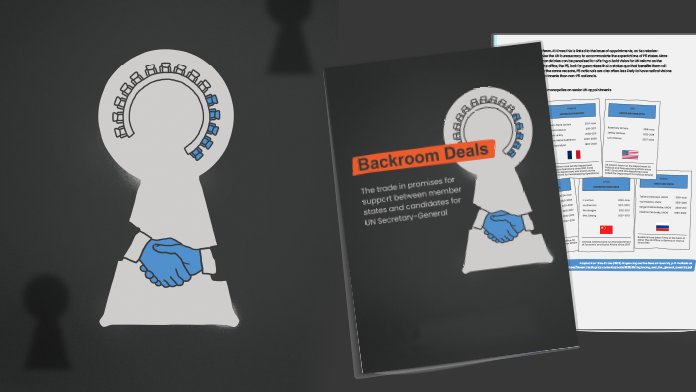
The CIPÓ Platform collaborated on the launch of the report “Backroom Deals: The Trade in Promises for Support Between Member States and Candidates for UN Secretary-General,” produced by the 1 for 8 Billion campaign, with support from the Robert Bosch Stiftung, and authored by researchers Ben Donaldson and Fred Carver. The publication investigates how informal negotiations between Member States and candidates for the position of United Nations Secretary-General can compromise the independence of the Organization’s leadership and influence how strategic posts within the UN system are filled.
Based on extensive documentary research and more than 40 interviews with former diplomats, former United Nations officials, journalists, academics, and former candidates for the office, the study gathers historical evidence of political deals struck during UN leadership selection processes. According to the authors, these negotiations frequently involve promises of support in exchange for appointing nationals from specific countries to senior positions within the Organization—a practice that reinforces the influence of major powers over the international bureaucracy.
The report identifies more than a dozen cases that are historically documented or deemed plausible by the researchers, spanning different periods of UN history. Among the examples analyzed are accounts involving the candidacies of Kofi Annan, Ban Ki-moon, and the current Secretary-General, António Guterres, as well as pressure exerted by the five permanent members of the UN Security Council—China, the United States, France, the United Kingdom, and Russia—to ensure that key positions are occupied by their representatives.
The study also draws attention to the practice known as ringfencing, whereby certain leadership positions are, in practice, reserved for citizens of specific countries. According to the authors, this mechanism reduces geographical diversity within the UN’s senior management, limits merit-based selection processes, and can undermine concrete proposals for organizational reform. The study argues that this type of arrangement promotes the concentration of influence in the hands of major powers and hinders the development of a leadership that is truly representative of the diversity of Member States.
Among the recommendations presented, the authors advocate for greater transparency in selection processes, an end to national monopolies over leadership positions, clearer and more merit-based recruitment criteria, and mechanisms capable of strengthening the Secretary-General’s autonomy against pressure exerted by Member States. The document also suggests greater public scrutiny of the negotiations that occur during campaigns for the office, particularly those involving the permanent members of the Security Council.
The publication is part of the efforts of the 1 for 8 Billion campaign—of whose Steering Committee the CIPÓ Platform is a member—to advocate for a more open, inclusive, transparent, and merit-based selection process for the UN Secretary-General. The goal is to contribute to a more representative global governance and to strengthen the United Nations’ capacity to respond to contemporary challenges with independence, legitimacy, and effectiveness.