

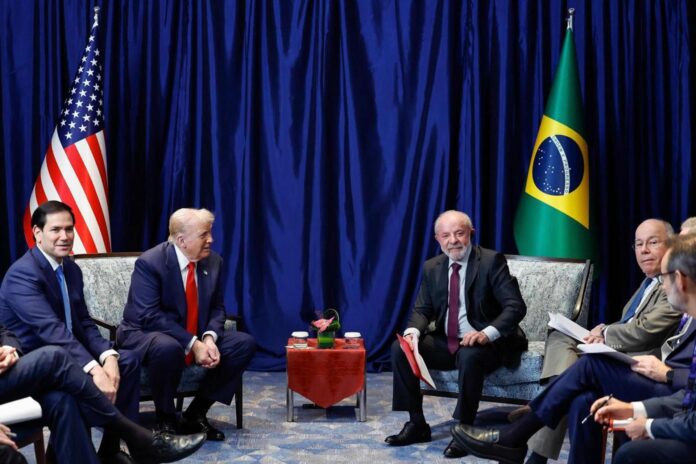
Maiara Folly, Executive Director of Plataforma CIPÓ, was one of the sources consulted in a report by the Catalan newspaper Diari de Barcelona on Brazil’s role in an increasingly unstable global landscape. The article, written by journalists Adrià Riera and Sebastián Marín, analyzes how the country is attempting to maintain its strategic autonomy amid current geopolitical tensions, particularly in the context of U.S. foreign policy and growing international polarization.
Folly explained that Brazil’s foreign policy has historically been guided by well-established diplomatic principles. According to her, Brazil has traditionally defended non-intervention in the internal affairs of other countries, the peaceful resolution of conflicts, and cooperation among peoples.
These principles are enshrined in the Federal Constitution and generally remain the foundation of the country’s foreign policy regardless of the government in power. The CIPÓ director stated that the main recent exception was the period of former President Jair Bolsonaro’s administration, which represented a break with this diplomatic tradition.
Folly also warned about changes in the international system. According to her, the current geopolitical context is marked by a growing number of violations of international law and the weakening of multilateral institutions. In recent conflicts, she noted, the United Nations (UN) has been widely ignored and is no longer seen as an actor capable of managing international crises.